Thursday, January 16, 2020

Small Fun and Big Smiles--The Rocketeer: Cargo of Doom Reviewed

There is a potential risk in everything you do. For a skinflint like me, there is even a potential risk in paying money for a movie you might not like. But, with the coming of my new favorite toy, Disney+, I’ve allowed myself to fall down all kinds of rabbit holes I wouldn’t have previously for no additional cost, and it was here that I was introduced to The Rocketeer.

My warm feelings towards this film have caused me to go out and read a number of the character’s adventures, the last of which being Waid and Samnee’s The Rocketeer and the Cargo of Doom, published with the blessing of Dave Stevens’ estate by IDW early last decade (see what I did there?)

Considering that Stevens, creator of the original Rocketeer character and consultant during production of the Disney Rocketeer film, created the character in the 1980s, this story is a very recent one in the annals of everyone’s favorite anachronistic pulp hero (ok Indiana, second favorite.) My question coming in then was simple: will Waid and Samnee be able to capture that ever elusive ‘magic’ that pulp adventures have while still telling a story that is authentic to the team?

THE PLOT

In the early 1940s, pilot Cliff Secord masquerades as a mysterious flying man known as The Rocketeer. Cliff has been the Rocketeer for several years now, and has gained experience and public approval in that time, but not enough to prepare him for what is to come.

When Sally, the niece of Cliff’s best friend, comes to work at the airfield with him over the summer and catches the eye of a perverted airplane inspector, Cliff finds himself with a new admirer and the feds breathing down his neck.
Sally confides in Cliff as the Rocketeer about the inspector’s unwanted advances, enraging Cliff enough to get into a fistfight with the inspector on Sally’s behalf, resulting in legal repercussions and a rift growing between our hero and his girlfriend Betty. This sets up two major conflicts in Cliff’s personal life: avoiding the new federal agent from the Civil Aeronautics Administration coming after him to take away his rights as a pilot, and surviving a very old school love triangle between our hero, the glamorous Betty and freckled Sally.

Conflict for Cliff’s life as the Rocketeer also begins to ramp up when a ship docks in Los Angeles harbor with a mysterious cargo and captained by a sinister figure who wants to add the jetpack Cliff uses to fly to his sinister plot.

This conflict comes to a head when the villain attacks the Rocketeer in the skies above Cliff’s airfield, successfully stealing his jetpack and leaving Cliff for dead, only to be recovered by none other than the very government agent seeking to ground him! When the agent realizes the reality of Cliff’s secret identity, he quickly comes to Cliff’s aid and he and Sally help him get aboard the mysterious vessel where he confronts his new nemesis over his stolen jetpack, only to discover what the ship was really carrying all along: living breathing dinosaurs! (Much cargo, much doom.) The villain reveals his plan to Cliff: unleash the monsters in New York to cause chaos and destruction, with upscaled copies of his jetpacks strapped to their backs allowing them to fly. Yes, flying dinosaurs. That is the plan as described by New York Times’ bestselling author Mark Waid. No I’m not drunk.

Our two-fisted hero can’t allow such a thing to happen, of course, resulting in a brawl aboard the ship that gets the villain killed, but releases the dinosaurs into LA!

Cliff, using a dinosaur-disintegrating gun purloined from the deceased villain’s ship, flies into action against his biggest threat ever--literally! This results in a funny and zippy final battle where Cliff defeats his prehistoric foes, but only with the help of both Sally and Betty.

The government agent clears Cliff, Sally enlists as a pilot for the United States, and Betty and Cliff make up before flying off into the sunset for one last kiss.

THE WRITING


Mark Waid creates a lovely gee-wizz pulp adventure that is perfectly in spirit with the original Rocketeer while still bringing a lot new to the table, which is exactly what I like to see from these sorts of stories.


There are some characters that just belong innately to their creators. This isn’t really a statement of the character or the writer, but rather it is a statement on how a character is viewed by the public. The simple reality is if, say, another Lord of the Rings book was published today, even if it were perfect, there would be panic in the streets because those characters belong to Tolkien, and nobody else has the right to touch them. Pop culture characters, however, rarely stay in this zone of possession, and almost certainly not after their creator passes as is the case with the Rocketeer.
Thus, when I came into this book, I didn’t want to see something that only revered Steven’s original Rocketeer book.  I wanted Waid to take the characters the direction he wanted to, just as Conway took Spider-Man the direction he wanted to after Stan Lee stopped writing him. Waid seemed to have a similar notion to me about the characters and the world, and pushes the story in a direction that develops them both.

Firstly, he introduces a new character in the person of Sally, and even goes so far as to make her somebody that knows the Rocketeer’s secret. Not only does Sally contribute to the plot as a fleshed out--if not fittingly archetypal--character in her own right, but she also allows us to have a more complete view of the original Rocketeer cast. We see Cliff’s best friend Peevy with family, which was not considered before. We see Betty express regret and jealousy, a side of her that we never got to see in the originals. Waid feels free to develop the cast with new characters and new sides to old characters the way Stevens might have should he have lived long enough to continue working on his favorite creation.

Waid also gets to explore the world of the Rocketeer. In the original Stevens’ adventures, the Rocketeer ran into characters that were strongly implied to be pulp heroes Doc Savage and The Shadow. Waid gets to dial this up a notch by bringing in living dinosaurs which are strongly implied to be from Skull Island, the home of the classic pulp monster, King Kong. What this does is add some really oversized and very super heroe-y villains for Cliff to fight, but also remains perfectly in spirit with what has come before. It’s new to the world of the Rocketeer, but it makes total sense in context of previous adventures. All that said, I do have one major problem with the dinosaur plot and that is this:


This got such a ghastly laugh out of me that my wife had to check on me. Mark Waid, New York Times bestselling author and author of my favorite graphic novel of all time, sat down at his keyboard to write a new story for an esteemed publisher about a beloved character, and then gingerly writes in his script ‘Now draw two Tyrannosauruses with jetpacks attacking a train.’

This could be a brilliant commentary on pulp storytelling, but it could just as easily be a sign that Waid needs a therapist. It’s so overkill, so completely befuddling that I want to take points off of the book as a whole, and yet it made me laugh so hard that I can’t bring myself to. Possibly more intriguing than ‘Why is this dumb-as-a-stump image in an otherwise clever book?’ is the question ‘Why can’t I decide if it makes me happy or enraged?’

The point is, the writing required this to be a thing, and I have no idea why. That confusion makes the book drop a level in my mind, but only time will tell if this book descends further or ascends to new heights should I ever decide if this image is brilliant or insane.

THE ART

I really thought that Chris Samnee’s art would be the low point for me. He has a very edgy, cartoonish style which I like, but didn’t necessarily think applied well to the Rocketeer. I feel so silly now in saying that this book has turned Samnee into one of my favorite artists, and for the life of me I don’t know why. The art in the book really shouldn’t be that much different than the scans I had seen online, so why physically sitting down and reading it turned me from a hater to a lover is genuinely baffling to me.

Whatever the reason, I do love Samnee’s work and I love it very much here. His characters are all charming, his dinosaurs are menacing, and his action is wildly exciting.

His style is simple but certainly not amateurish: he knows when to keep things quiet, and then he knows when to overpopulate a panel with as much fire, heavy shadowing, and scales as humanly possible. What this does is create a subconscious effect on the reader. Peaceful scenes like at the airfield or at the cafe are relatively simplistic, whereas chaotic action scenes such as the fight on the boat are chaotic images, drawing the reader into the suspense. It’s a brilliant trick that works wonders from cover to cover.

WHAT I’VE LEARNED

This is a bit of a tough question for me to answer, but I think it is to not underestimate the power of fun. The world isn’t ending in this story, nobody monologues about ethics or timeless values, and the art is simple and flashy. Essentially, nothing that I associate with Mark Waid is in this book. But ironically, it is the lack of those things that makes it work. Cargo of Doom is here to have a good time, and it’s not here for much more than that. You’d think that makes a book like this shallow, and compared to something like Kingdom Come you’d probably be right. But that lack of depth doesn’t make it any less effective. Oceans are deep. Waterslides are shallow.

CONCLUSION

As I wrap up my thoughts on this book, I risk accusation of sacrilege for the sake of honesty: this is my favorite Rocketeer story. What Waid and Samnee accomplish is hardly as revolutionary as what Stevens did back in the 1980s, but from an artistic point of view, I’d argue that Waid and Samnee tell a much more effective and structured story than what Stevens managed in either of his two arcs on the character.

Cargo of Doom is colorful, enjoyable, and mostly tasteful (dinosaurs with jetpacks excluding.) The art is affecting and the writing stays true to what the Rocketeer has always been while fleshing out the characters and the world.

In closing, I feel that Cargo of Doom is one of those books that you could hand to anyone and they’d enjoy it. This is one of my favorite non-Marvel/DC books I own, and is well worth a look to anyone with interest.

The Rocketeer: Cargo of Doom (2013)
Written by Mark Waid
Art by Chris Samnee
Colors by Jordie Bellaire
Lettering by Shawn Lee


Tuesday, January 14, 2020

Ahsoka Tano--Digital Art Piece

An attempt at digital art for me. It's not perfect or anything, but this is the best attempt at digital art hat I've had thus far. One thing at a time, I suppose.

Saturday, January 11, 2020

Superman as Christ: An Analogy of Arrogance--An Essay

I apologize to all parties involved that the holidays have severely slowed my normal Thursday story reviews. That should be righted presently, but to hold everyone over, here are a few thoughts on something that has plagued one of my favorite characters for some time now, this being the potentially unforeseen side effects on the character of Superman when artists visually use the analogy of Superman as Christ.

The origin of DC’s flagship character, Superman, is rooted in religion. Having been created by two Jewish men in 1938, Superman’s origins were rooted in distinctly Jewish thought. As the character progressed under more mainstream writers however, the character gained new powers, new enemies, and a new spiritual significance that extended beyond strictly Jewish thought. This has led to a sort of Superman-specific trope that has come under fire in the past few years: the analogy of Superman as Christ, or at least as a Christ-like figure. Many writers utilize this trope despite its general dislike among fans of the character, yet most fans cannot explain quite why this trope is so troublesome for the character of Superman, which has led me to wonder why this trope is so frustrating to fans. As a fan of the character myself, I would argue that the Superman as Christ trope is harmful to the character because of the arrogance it implies onto the character.

Firstly, allow me to examine what precisely I mean by Superman as Christ. For me, the Superman as Christ trope is whenever a writer or artist juxtaposes Superman with Jesus Christ using visual or written cues. Attached, for example, is a shot from Bryan Singer’s ‘Superman Returns,’ where Superman’s unconscious body falls naturally into the image of a cross after a heroic sacrifice. What this does is link Superman to Christ in the mind of the viewer/reader, making Superman to be a character in the same vein as Aslan from the C.S. Lewis’ ‘The Chronicles of Narnia:’ a savior stand-in.


To be clear, I understand the draw of this trope to writers, as the modern age Superman and Christ as recorded in the Gospels have much in common. Both are champions of righteousness, and an inspiration to people. Both are the only son of a father from another world, sent to ours to help us. Both are despised and rejected by the presiding authority due to said authority’s desire to claim righteousness for itself. The similarities are plentiful: I neither deny them nor do I dislike them. Where Superman as Christ hurts the character of Superman is not in the literal details, but in the degree of those details.
   
What I mean by degree is the degree to which Superman is christlike: the degree to which he is perfect, alien, or godlike. As a firm Christian, I feel concern when any character is held up to Christ as some sort of equal, but the problem extends beyond mere religious quibles and into what I view as the defining character trait of Superman as opposed to every other straight-laced superhero: humility.

See the source image

In the short but history-altering verse of John 10:30, Christ makes a massive claim: “I and the Father are one.” What is meant by this in a scriptural and cultural context is that Jesus is claiming to be the one true God, creator of heaven and earth, savior of mankind, and the final judge of all creation. These claims and similar claims made in countless other verses--I’d encourage the reader to look up a list of these claims if not convinced of this fact--are either crazilly arrogant, or true, and while your mileage may vary on the veracity of the Gospels, you cannot accurately argue that Christ is anything less than the one true God as portrayed in scripture. Christ is God in the Bible, and by extension, is God in the popular consciousness that writers are trying to invoke with these allusions.

Superman, on the other hand, as portrayed in the mainstream DC continuity, is hardly God. While the character is considered to be godlike by many writers and fans because of his otherworldly power, he is portrayed as a wholly mortal being: a character that was born, makes mistakes, and endures pain--albeit only under extreme circumstances. Superman himself, in most adaptations, is proud of his alien heritage, but doesn’t hold it over the people of earth’s heads. He by no means wants the people of earth to view him as something that is other--let alone above--any of them. Attached is a beautiful page by Johns and Franks’ ‘Superman: Secret Origin,’ a favorite of mine which I reviewed earlier this month, which zeroes in on this dichotomy. Superman is a person like you, and he’d admit it proudly.


Superman doesn’t make pretenses to be anymore than what he is: a kid from Kansas, just here to help. Neither does Christ as portrayed in the Gospels: He is God, and therefore there’s no posturing in claiming to be what He is. The two are similar in many ways, but are separated by degree. This is where my problem with the Superman as Christ trope comes in to play: while Superman is an essentially humble individual who would never make the claim to be a stand-in for Christ, the writers make this claim for him every time that this trope is employed.

Superman is not Christ. He is not on the same level, nor would he claim to be worthy of equal reverence. He doesn’t claim to always know what the right thing is, but always fights for the freedom of people to find what the best thing to do is as best they know how. Superman is not a stand-in for a savior, but rather is just like the rest of us: a good guy, trying to do the best he can with what he has to offer humanity. When writers portray Superman as Christ, they impose a pretentious and arrogant attitude on a character who should be, at his core, small town, good-natured, and humble.

So now the question comes as to what is to be done with this trope. I acknowledge it’s appeal, but also point out what damage it does to the character when it is employed. I thought about if there is a way to take the teeth out of this trope’s bite, and I realized that I might have seen it done once: once, by none other than Zach Snyder.

Zach Snyder gets a lot of dislike from fans of the comic book Superman for dozens of reasons, but abusing the Superman as Christ trope in his debut DCEU film ‘The Man of Steel’ is one reason that gets thrown around by fans. As a result, it should come almost as much a surprise to my reader as it does to me that I bring him up as an example on how to disarm this trope. There is one scene in ‘The Man of Steel’,  however, that truly does soften Snyder’s overuse of this trope.

See the source image

I know I tread on dangerous ground when I bring up the much-maligned priest scene as a positive to this movie, but I’ve never minded it in a personal sense. It has always seemed in-character to me, and harkens back to a similar scene in Loeb and Sale’s ‘Superman for All Seasons.’ Beyond all of that, however, I would argue that this scene portrays Superman’s true stance in direct juxtaposition to Christ, and as such smooths out the rough edges of the allusions that are to come later in the film. In it, Superman comes to a seemingly random priest to ask for advice about what is to be done about Zod’s demands to surrender himself to the Kryptonian Army. Viewers who complain that Superman would have been wise to think through a more complex battle strategy miss the point that Zach Snyder is trying to convey with this scene: Superman is not on the same level of Christ, or even on the same level of a priest. He’s just a man with incredible abilities and a big heart, who needs advice and encouragement just like anyone else. This is Superman. This is Humility.

    In conclusion, the Superman as Christ trope is disingenuous and harmful to the character of Superman, and should not be employed unless special efforts are taken to portray Superman’s humility and his humanity, if even then. To avoid this trait is to let Superman’s character naturally stand for what it is: noble, serving, and above all, humble.

Monday, January 6, 2020

The Mandalorian—Art Piece

For Christmas, the Mrs. got me a lovely set of alcohol-based grayscale markers. As the first season of Disney’s ‘The Mandalorian’ finished over break to much fanfare, it made sense to tackle the show’s monochromatic protagonist as my first project. Not perfect obviously, but seeing as though this is the first time I’ve used these markers ever (not even testing them before this) I can’t help but express some amount of considerable excitement.


This is the way.

Friday, December 20, 2019

First Reaction--The Rise of Skywalker

Well, the final (oh, of course it’s final) Star Wars film has been released at last, and it seemed worth the effort to scribble up a brief first-reaction review of it here before the internet has decided what the one true opinion regarding this movie is. While not a comic obviously, Star Wars is a cornerstone of pop art culture, with deep ties to the comic book world. Thus, it seems fitting to describe my reactions to its final installment here.

Rather than being overly formalistic with this review, I’m just going to tackle the major topics in no particular order and scribble up a conclusion at the end to let you know my thoughts. Forgive any poor formatting and casual styling please. Spoilers ahead, although if you’re reading this review and still intend to be surprised by this movie, then you have whatever I say next coming to you. With all that said…

Image result for the rise of skywalker still
STAR WARS, THE RISE OF SKYWALKER FIRST REACTION

How it Handles ‘The Last Jedi’
So, ‘The Last Jedi’ is no bueno. Some like it, I love and respect that. I was one of those people the first two times I saw it. But, upon further viewing, the massive problems with the film began to rear their ugly heads, some of which the reader is no doubt familiar with by now, and others being totally unique to me and my own tastes and ideas on how stories should go. I liked a lot of what was done in the movie, namely the great Luke/Kylo/Rey drama, but the film just had this nasty attitude surrounding it for me personally. I won’t get too deep into my philosophies regarding ‘The Last Jedi’s now infamous ‘subversion of my expectations’--although it would be worth a post, as it has influenced by style as a writer greatly. It will suffice to say that I found the ‘subversion’ of ‘The Last Jedi’ to be a cheap trick that continually got in the way of what could be a very dramatic story.

This, combined with the absolute heckstorm dumsterfire that has been my beloved Star Wars fanbase for the past two whole years--and no, nobody on either side of the issue has handled this with an ounce of maturity--the final installment of the sequel trilogy had a lot of baggage for me personally, coming into it.

Abrams and co. seem unsurprised by these feelings, and do a lot of course-correction in ‘The Rise of Skywalker,’ to be referred to as ‘TRoS’ from hereonout because it is a long and dumb name. Your mileage on this course-correction may vary. For me, as someone who disliked parts of ‘The Last Jedi’ and loved others, this film nailed it. It killed off all the worst parts and kept all the best parts: revealing Snoke came from the Emperor (rather than being from actual nowhere) and revealing that there is a perfectly good reason for Rey’s massive amount of power, while also maintaining good stuff like the bond between Rey and Kylo and making a return to Ach-To island, which I thought was a lovely location from the last film.

Like it or not, this movie tries to bury some of what ‘The Last Jedi’ did. For me, it’s just the right bits in just the right ways, but I’d understand that this could feel cheap to people who liked ‘The Last Jedi,’ or downright confusing to people who wonder why Disney would spend several billion dollars making movies when they hadn’t decided who the protagonist’s father was until just now.

How It Handles the Rest of the Saga

This aspect was most important to me coming into the film, and my feelings about it are a little complicated.

This film does a terrific job undoing what I saw as damage done to my favorite original trilogy characters by the past two films. This damage was nobody’s fault per se, but with the premise of ‘well, after three movies where our heroes changed and defeated the villains, aren’t you glad to see them fighting the exact same type of villain again,’ some damage was bound to be done.

This was compounded by every character seeming to unlearn their arcs--Han becoming a scoundrel again, Luke becoming a nobody again, etc.--and coming to a subsequent horrible demise. What this did to the rest of the saga was, essentially, a complete negation of all the good about it. Who cares if Han got Leia? The dude dies in a hole like a loser. Who cares if Luke beat Vader? The Empire came back as the First Order with no real consequences.

A lot of this damage was ingrained in these movies since ‘The Force Awakens.’ That said, however, every character gets at least one moment to retract some of that damage. We get to see, in the most touching scene in the film, that Han’s sacrifice wasn’t for naught. We get to see Leia pass quietly and be reunited with her brother in the Force. We get to see Luke at peace as the Jedi we knew he’d eventually be. It took some dumb antics to get them where they needed to be, but the credits roll on ‘TRoS’ with all being right with the world.

The ending to the movie is perfect and frustrating. The ending is perfect because it does wrap up the saga perfectly. It is frustrating because it is copy-and-paste the ending of ‘Return of the Jedi.’ Emperor is destroyed again, planet-destroying weapons are gone, we see planets rejoicing now that the bad guys are gone (yes I grew up with the special editions shut up) and our heroes all meet on a forest planet to party before our protagonist sees a force ghost of his/her mentor, wrapping up the saga. The endings are identical. Why we needed three more movies to end up right back where we started is anybody’s guess.

These are silly little foibles that, as I said, don’t hurt the saga in any real way, they’re just puzzling. However, there is something that poses a problem for me in terms of the saga: wasn’t the chosen one supposed to destroy the Sith? 

This is made a big deal of in the prequels, and the story was--as George Lucas intended it--that Anakin is the chosen one to destroy the last of the Sith, but only fulfills this goal when his son shows him the love he doesn’t deserve at the end of ‘Return of the Jedi,’ causing him to buck the yoke of the Emperor. Disney has played with this a little bit, suggesting in auxiliary media such as ‘Star Wars: Rebels’ that Luke Skywalker was the chosen one, and he fulfills the prophecy by converting his father back to the light, who then destroys the Emperor, the last Sith. Either way, the chosen one kills the Sith. They’re supposed to be gone. That’s the point of Star Wars. Except, the Emperor is not only still literally alive in some capacity, but is also carrying the soul of every Sith that ever lived within him? This would mean that not only have the Sith not ended, literally not one doggone individual Sith has ended.

What the heck is that about?

Does the film mean to suggest that since the Emperor is some kind of zombie, the Sith are returning rather than being still alive, and were destroyed for a time? Does it mean to suggest that Anakin by using Rey as his avatar in the final battle along with the rest of the Jedi, accomplishes his goal in the throne room? Does it mean to suggest that Luke, by training Rey, is the real chosen one and destroys the Sith by proxy? I’d accept any of these answers, but in truth, I get the sense that the real answer is ‘ah crap I knew we were forgetting something.’

It would be an easy thing to forgive, were it not the entire point of the saga. However, seeing as though it is, a couple lines regarding the fact would have been timely.

How it Handles Rey

Image result for the rise of skywalker
Ah, Rey. You controversial little rascal you.

I’ll be blunt with you all, there is only one character on my ‘Star Wars: Black Series’ action figure shelf that is repeated twice, and its Rey. I comprehend a lot of the frustration surrounding the character. I get that she’s far too powerful without any explanation--or, at least, she was before now. I get that she doesn’t have any real training montages or anything like that. But all of these things, to me, felt less like real mistakes and more like choices that didn’t do any real harm to the character or the world of Star Wars.

The truth is, even in past installments, Rey was my favorite character in this trilogy by far. She’s charming and charismatic, with a wide-eyed wonder at the world to match the wonder of the audience, and an overall gentleness that makes, for me at least, an ideal protagonist.

Thus, take everything I say on this character with a grain of salt because, for me, she was completely acceptable before. That being said, however, she’s at her best in this movie without a doubt.

If you want to see her train and struggle, fine, you definitely get that with this installment. ‘TRoS’ takes place years after ‘The Last Jedi’ and, sure enough, Rey has been training to be a Jedi the majority of that time under Leia--whose own training was far more extensive than we were lead to believe in past installments. Additionally, a great deal is made out of the pressure that is put on her to not become the most powerful Sith of all time, forcing her to revert to being a loner and leading her to resist the help of her friends, much to her detriment. This leads to some ‘no Mr. Frodo don’t’ antics that serve the film well and create a tight conflict around Rey that doesn’t change the character at all while still addressing fan concerns. Don’t like how powerful she is without a master to guide her? Turns out, neither does she, and it’s something she needs to address for herself in this film or else risk the consequences.

This leads into what is, perhaps, the most ham-fisted attempt to fix ‘The Last Jedi:’ Rey is Rey Palpatine. (Dun dun duuuuuuh.)

This felt beyond silly to me. Her power level needed to be addressed, I admit that wholly, and a family lineage is a great way to do that, but in truth I was happy with her being nobody. I predicted it before ‘The Last Jedi’ even got a trailer, and it seemed natural to the character. That being said, making Rey a Palpatine always intrigued me as well. The way this film goes about it, however, makes me actually laugh, and I don’t believe that’s intentional.

I thought it would be terribly clever to make Rey some kind of creation of Palpatine’s. In current canon Vader comics, the reason Darth Vader has no father is because the Emperor used the force to create him. It’s a bit of a shocking reveal, but it makes a ton of sense with what the Emperor reveals to us about himself in Revenge of the Sith, and seeing as though Vader was a disappointment to the Emperor, is it too much to believe that he tried it again on some other desert planet? 

No, I’m not so naive as to assume Abrams and co. would actually reference the Vader comics, but they could have done something to a similar effect. What we instead get is that Rey is the Emperor’s grandchild, which means: A) the Emperor had a freaking son, which means B) the Emperor had a woman in his life, which means that C) judging by the ages of all parties involved, he would have had said son at some point during the original trilogy. And none of this comes up during those films or in any auxiliary media?

It’s done stupidly, but I like the choice. It makes for great family drama--Star Wars is famous for that after all--and it addresses her massive amount of power. It was just done really, really, stupidly. Glad it’s part of the canon, but frustrated it was part of the narrative.

All in all, Rey holds her place as an excellent and charismatic protagonist to this trilogy, and I like most of what was done with her, though I might have done some things differently in practice.

How it Handles the Supporting Cast Image result for the rise of skywalker

The supporting cast is fun as per usual with these movies. Finn and Poe steal the spotlight, being by each others’ sides for nearly the entire film, creating a squabbling comedic duo in the spirit of Merry and Pippin. They work well together but also work decently separately.

Finn seems to get understated a lot in these movies. If you look at what he actually accomplishes, he actually is a nifty character with two nifty arcs, even in ‘The Last Jedi.’ Finn is a character caught up with two conflicts: one, he’s a stormtrooper, and that weighs on a bro. Two, he cares a lot about Rey--the film almost hints romantically--but stuff keeps on separating them.

As to the first, Finn begins by running from the First Order in ‘The Force Awakens,’ returning to Starkiller only to go get Rey. ‘The Last Jedi’ forces him right back into the First Order in disguise, forcing him to face down his old boss and pick a side: the rebellion. Now, having grown past his stormtrooper past, he finds a group of First Order deserters on Endor whom he helps to grow in the same way.

As to the second, Finn solves it the first time Rey is captured by rescuing her, at the cost of being put into a coma by Kylo Ren. Finn, during his time with Rose (I promise it wasn’t all a complete waste) learns to care about the cause of the rebellion more than he cares about his attachment to one person. In this movie, he learns to let go and trust that Rey to do what she needs to do without him by her side. He accepts their separation.

Both of these are reasonably cool character arcs that seem to get swept under the rug when talking about these films.

Poe is a loudmouth hotshot like he always is. They riff on him a little bit, revealing he was once a spice runner (judging by the tones in which this is discussed, I assume this to be a form of drug running.) Mostly, however, the character is static, save for a new love interest who is barely in the film, and a speech from Lando that motivates him to step into Leia’s shoes as general after she passes.

Speaking of the slimy, double-crossing, no-good swindler, Lando is as charming as ever. Although he’s not overly involved in the narrative, I was happy to see that they gave us as much of him as they ultimately did, making him the only human character from the original trilogy to not get offed in this one.

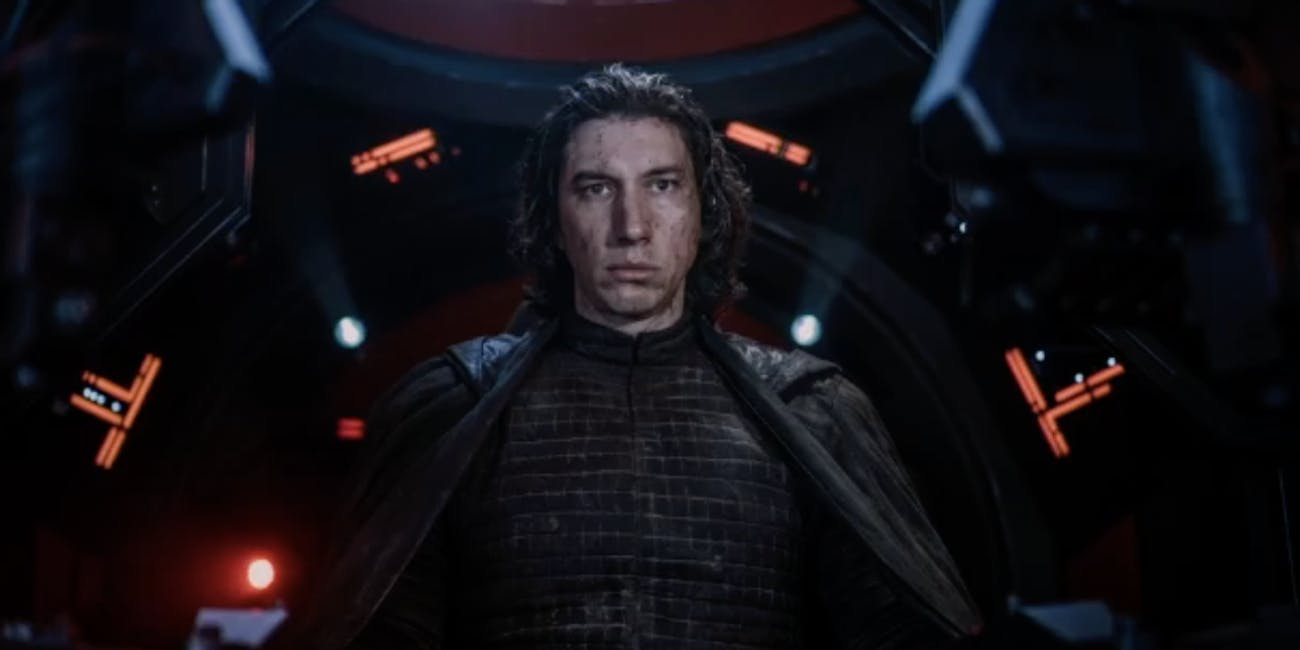
How it Handles Kylo Image result for the rise of skywalker kylo

The last Skywalker and the most complex character in this trilogy, I think what they did with Kylo was ultimately very satisfying, but also very predictable.

Kylo, so far, had been the most unpredictable character in the trilogy: an anarchic, volatile force that could help or hurt the First Order in pursuit of his own selfish goals. This was something that I loved about Kylo, seeing as though since the dark side is all about giving into your every dark feeling, it would make sense that Kylo would become more anarchic the more powerful he becomes. However, in the time between ‘The Last Jedi’ and this installment, he seems to have gotten more of a lid on his emotions.

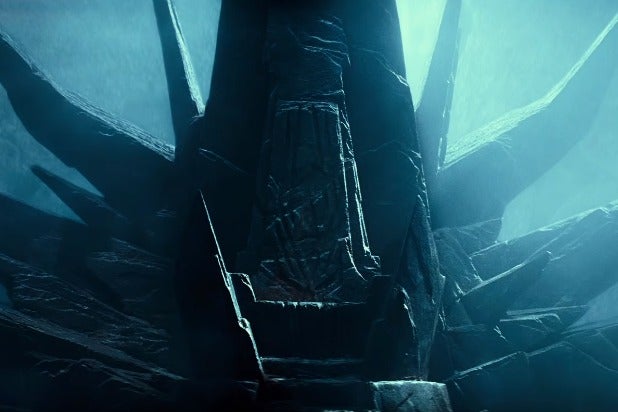
Kylo begins the movie with an absolutely incredible opening fight scene that eventually leads him to the secret laboratory of the Emperor, and it is after throwing his lot in with this Final Order that Palpatine is creating that he begins searching for Rey in an attempt to turn her to his side. With Rey’s self doubt at a peak to match Kylo’s newfound menace, Kylo becomes a really intense antagonist in this film.

All of this changes, however, when Rey, after stabbing Kylo in the chest with his own saber, gives up a little bit of her life to heal him, a power established earlier. This causes Kylo to reflect on his current nature so deeply that Harisson Ford is in Star Wars again, and ultimately comes to save Rey, giving up his own life to return hers.

It’s a satisfactory arc, no doubt. It’s redemptive, cool, and I smiled like a fool when they kissed (I’m a sucker for that crap leave me be.) That said, however, it left me wanting more. The character was so inventive in past installments, but I feel like I’ve seen all of these beats played out somewhere or other before. There’s nothing wrong with his arc in this movie, I like it very much. It’s just more interesting to think about after the fact than it is to watch.

How it Handles Emperor Palpatine Image result for the rise of skywalker emperor
Ironically, the more hyped everyone got for this characters’ return, the less interested I was in it. Don’t get me wrong, Palpatine is one of my favorite villains of all time. However, bringing him back at this point seemed an odd choice to me, and I think that reaction proved true. Odd. The choices made for the Emperor were not wrong, nor right, but certainly odd.

First of all, he’s alive. Zombified and hooked up to a wacky crane, but alive. This frustrates me from a purely pragmatic point of view. When Rey blasts Palpatine into litteral pieces with all the force of every Jedi to ever live at the end of this movie, he seems pretty doggone dead to me. That said, he seemed to have been pretty doggone dead when the chosen one chucked him down an infinite abyss into the core of an artificial planet, which then blew up. I feel like at this point, license has been granted to the writers of Star Wars to bring back whoever they want, whenever they want, and I don’t believe I’m comfortable with that.

That being said, I’m pretty glad he’s here. The Emperor is at his most evil in this movie, and it makes for a sort of progression for the character. In the prequels, he is completely masking his evil as a legitimate government official, in the originals he is masking his evil somewhat, posing only as a wicked dictator, and now he is revealed for what he truly is: the manifestation of every Sith to ever live, surrounded in black magic and nazi super science. This villain has never been more terrifying than he is in this film, shooting spaceships from the sky with his Force lightning and cackling like an actual monster with soulless white eyes. I love the whole doggone thing so much.

This, however, leads to more of the odd for Palps in this film… how? How did he survive the Death Star? How did he get hooked up to the zombie crane? How did he get his zombie crane to a world beyond the known galaxy? How did he build a man who then turned Kylo to the dark side? How did he then get an entire army and more spaceships than ever seen on screen at one time, all while pretending to be dead, all while being hooked up to a gal darned crane!? A loan from Wells Fargo could have handled the funding, perhaps.

I don’t deny that any of this could happen. I just want to know how the heck it did happen.

Speaking of unaddressed things regarding Palpatine, let’s address that final duel. In this duel, force powers seem to be made up and mastered on the spot. Let’s give a breakdown, shall we:

-The Emperor, gives up on the whole ‘strike me down’ thing and decides he can also    come back to life by draining the life out of Rey and Kylo. -Rey and Kylo decide that getting the life drained out of them doesn’t kill them, it just makes them really tired and sad. -The Emperor decides he can shoot ships out of the sky now. -Rey decides that she has the power of every Jedi ever, and zaps the living crap out of the Emperor. -Rey decides that this kills her. -Kylo dies using a force power that actually was established earlier, then decides to become a Force Ghost, which I wasn’t under the impression he knew how to do.


I’m not one of those dudes that doesn’t like new Force Powers. Rey is using a different set of texts than all Jedi we’ve seen so far, it makes sense that her powers will be different. What bugs me is how ninety percent of the abilities that are used in this fight come out of absolutely nowhere. Again, I’m not saying it can’t happen, I’m only asking how did it happen?

And that sums up my thoughts on the Emperor in this movie: I’m not saying it can’t, I’m only asking how, and Abrams and co. don’t seem quick to answer.

Conclusion

I’ve made a lot of criticisms in this review, so much that one might think that I dislike this movie or this trilogy. Now, having seen TRoS, I can happily say that I like this trilogy just fine. And, seeing how I felt about it beforehand, that really is due entirely to this film.

This film really is a touch dumb. It meanders about, and does big wacky things because they’re awesome without any real thought behind it. That said, I don’t deny that they’re awesome, nor do I feel like they contradict or ruin anything that’s come before. It’s dumb fun, but it’s also relatively inoffensive fun as well.

This movie works best for me when viewed as the end for these characters’ journey. As an ending to the saga, as I said, it’s just Return of the Jedi again. But as an ending for these characters that Disney has made for us, it makes me happier than it probably should.

Not only does it give these characters a solid ending, but it also returns to saga to a form of equilibrium. Even Han is given a retroactively happy ending with his son. The galaxy as a whole is balanced again.

I plan to see it again, of course, and my thoughts about it might change then. As I confessed earlier, I liked ‘The Last Jedi’ at first too. That said, after I saw it last night, I went to sleep at peace. The saga was fixed, this trilogy was completed, and the force was finally balanced.

For now.